.png)

.svg)
.svg)
.svg)
.png)


About the podcast
Real stories. Honest reflections. Conversations about leadership, change, and the work that shapes our world.
Hosted by Sowmya Mahadevan, Chief Orchestrator at Kriyadocs, The Publisherspeak Podcast features interviews with people making meaningful moves—inside and outside the world of scholarly publishing. From academic leaders and publishing professionals to coaches and change-makers, each episode goes beyond job titles to explore personal journeys and the mindsets behind impactful work.
In this episode
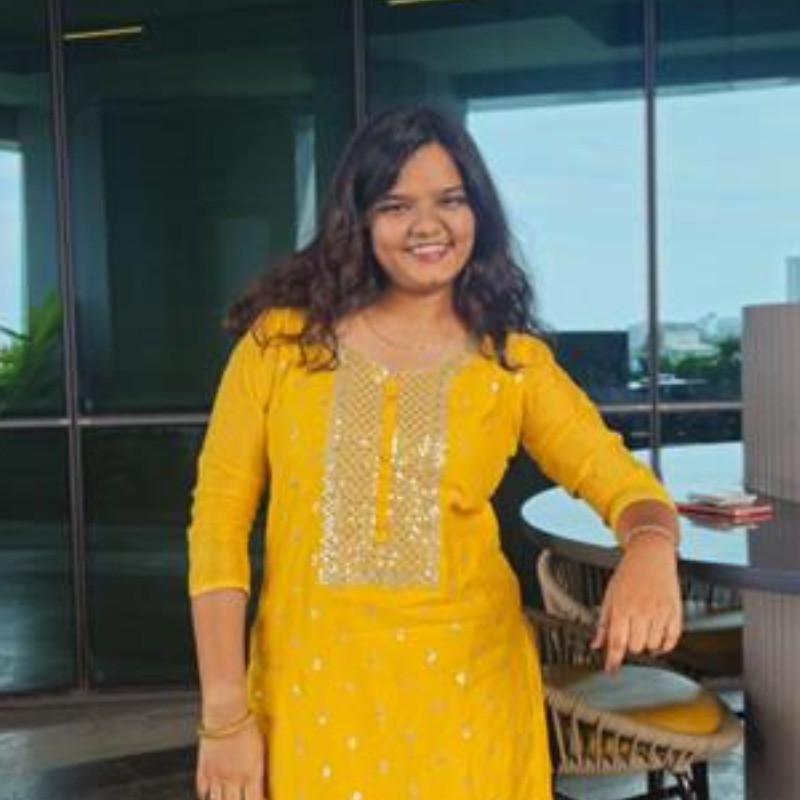
Host Sowmya Mahadevan sits down with Prabha Choubina, Publications Director at the Association for Child and Adolescent Mental Health (ACAMH), to explore the evolving landscape of scholarly publishing.
Prabha shares her journey from academia into publishing, and how her interdisciplinary background shapes the way she thinks about publication strategy. Sowmya and Prabha talk about what authors really need today, how transparency changes the author experience, and the unspoken challenges editorial offices face behind the scenes.
Dive into the full conversation below or watch the episode here.
Full conversation
Sowmya: Hey everyone, welcome to today's Publisherspeak Podcast and today I have with me Prabha. Prabha, it's so good to have you on this podcast here today. I'm really excited to hear what you have to say. But before you get started, you know there's one first question that I really like to ask all my guests. How did you get into publishing and how did you get to where you are today? What is your journey?
Prabha: Hello everyone. Thank you, Sowmya. I think I'm very excited to talk about this. So, when you ask how I got involved, how far back can I go in this question.
Sowmya: That's way back.
Prabha: I'll try to keep it concise. Well after I finished my graduation in microbiology and post graduation in environment science, I applied for science writing internship offered by the then Indian Central Government Science and Environment Ministry Interestingly, it was an elaborate selection process for an internship with essay submission, an interview, et cetera. But it was prestigious so I think selection process had to be quite strict. Now halfway through that internship I started as assistant editor for a magazine on medicinal plants. Then I moved to the UK and was fortunate to work in various prestigious institutions like the United Nations Environment and Development, Lancet Infectious Diseases and Henry Steward Publications, Royal Society of Medicine, et cetera. So, in a nutshell, I've always worked in academic science journals. But how I got into mental health was just a happy coincidence and with a cam. And it has been 12 years and counting. This small incident when I got involved with ACAMH was I have, like I said, I was coming back from a long maternity break and then I had applied first time round and they were at that time looking for a part time person, but I was looking for a full time. So, I said, okay, this doesn't work. And then I got an invite from them to go for the interview again. And then, and then the, the minute I got there, the person who was, who happened to be my manager after that just said something wonderful. He said this job was always yours. So, we called you back. I think that made me relax and I said I'm taking this job regardless. I'm just taking where somebody says this job was always yours. So yes, it was a very, very happy coincidence I got involved with ACAMH.
Sowmya: That's wonderful. I think that was a destiny kind of bringing you to where you are today. But it's fascinating that found your calling in mental health and in what you're doing today. But along the way, I mean you've been a researcher, that's where you started. You said you started off in writing for science and then have evolved being on this side, which is on the publishing side and you know, putting the content together for the public world. Was there anything that surprised you along the way when you joined in came into the publishing world, so to speak?
Prabha: I mean, in some ways, yes, my role has been changed from researcher. I also did production. You know, it has changed that way. But like I said, I've always tailing publishing and I think when it comes to my role and what has kind of surprised me a long way, I would start by saying I'm extremely fortunate and grateful for the way my role evolved at acam and I'm kind of thankful for the support I have received from my colleagues. And peers over the years. Like I mentioned, I was coming back from an extended maternity break, so I decided to ease back into the work. So, I was never afraid to start small and learn again.
So, every time I applied, for example, when I moved to uk, when I applied to United Nations Environmental Development, it used to be the same question, you have done this already, why are you applying for this? If you've done it already, why are you applying? So, I was never afraid to start small and then learn everything around it. So, I think starting as a junior member of the team and to lead a small team today, where the editorial office rule has changed so much and has become so much more exciting and intense, it's been a remarkable journey, personally and professionally. But what surprises did I have on the way.
Not majorly surprises, but I would say when I started, perhaps the role different stakeholders played, like the academic editors, publishers, editorial office, it was a lot more defined and can I say it was a bit more compartmented. Like academic editors were responsible for the content and the direction of the journal, publishers handled sales, marketing, production, hosting, et cetera and the editorial office handled everything in between, offering support. Now the remit has changed dramatically over the years. Now the editorial office is now more involved and rather leading solutions and strategy and support and not just be as a support. I even remember attending annual meeting with publishers along with editors.
Sowmya: That would be it.
Prabha: You know, we go to the meeting and we present the data, we talk, we do a bit of strategy, we check the numbers and that was it. But these days I know that we are constantly in touch, sharing information, strategizing, bouncing off ideas. So, I think that is a major change I have seen over the few years and the changes has been rapid. So if I look back 10 years to 5 years and 5 years to now, things have changed quite rapidly.
Sowmya: So, going more from just being a support function to actually helping shape the strategy is sort of what I'm hearing here. Now tell us, you are currently the publications director at the ACAMH. So, what is it? What comes under your purview? What keeps you awake at night? Or what is your mission?
Prabha: Like I said, it is the role. I mean, just speaking very strictly about what I do and my role at ACAMH, I manage a small portfolio of very prestigious journals. So the editorial office is kind of a nerve center. I'm in touch with the editors, the publishers, the researchers, the authors, the reviewers, along with my team, of course. So that's the, that's the role. So it's, it's more operational strategy and everything in Between. So that's the role at ACAMH.
Sowmya: And I think you put it really right. You're sort of like the nerve center, connecting, I would say, different pieces of participants in this sort of ecosystem right now, you know. Yeah, I mean, I met you first at The Publisherspeak conference, so thank you so much. It was wonderful to meet you in person and happy. Able to exchange some information back and forth as well. I think one of the topics that came up quite a bit over there was author experience and, you know, the transparency around author experience and things like that.
So, this is a topic that I wanted to, you know, pick back because I know we were having some conversations around it back then as well. So, what is your take on, you know, what do you think authors need the most? Do you think publishers are providing that? Do you think authors know what publishers are providing? So this seems to be a very hot topic that's being talked about right now. So, what are your takes on it?
Prabha: Yeah, absolutely, I think. So when I say this is what authors think, because I'm just, I'm going to say that I'm relying on the author surveys conducted by the publishers and our own experience of interaction with them, which is on a small scale, I must say, not really a certain subsection. So, my understanding is that what the authors need from publishers is perhaps clear instructions. We get to hear this quite often.
I don't know if AI use is allowed. Not allowed. If I do this, should I do formatting, not formatting, all sorts of things. I think they need clear instructions and of course, the easy submission portal. And once the paper is accepted, possibly less paperwork. Do I sign this paper? What's the licensing? Do I have to get open access, invoice, you know, all sorts of things. It's probably less paperwork and of course, better promotion and visibility for the papers. I think this is what the authors want from the publishers.
I would say there is greater focus on author experience in the recent past, but more can be done. And also I think there is this when what authors expect, there is what they expect from the publishers and what they expect from the journal. There is some kind of a gray area what it is that the publishers can do, what is it that the journals can do? Like I said, author experience is now at the center of the new submission systems that are being built. It is happening, but like everything else, you know, more can be done.
Sowmya: Absolutely. Can I just ask you a little bit more for you to expand a little bit more on what authors are expecting from the publishers versus the journal. What is that distinction that you are you're seeing because first time I'm hearing of that sort.
Prabha: Yeah. I can completely understand from an artist's perspective that once I have submitted it, just my paper, it just goes somewhere, and there are people handling it. There is an editorial office, and there is a publisher. But what part the publishers? For example, I'm having an issue with this portal. So, is the publisher responsible? Is it the editorial office that is responsible? Or I'm having, I have issue with the turnaround times.
Why is it taking so long to get the review? So, is the publisher involved? Is it the editorial office that is involved? So, there is little confusion. But I think when it comes to the editorial office, what can be referred to as journal in author speak, reasonable turnaround times, good feedback and help to improve their paper is possibly what authors are looking for.
So, yes, I think there are, I mean, we do see instances where the authors are emailing the publisher saying what is happening with my turnaround, my review. My paper has not had a review. So, the publishers obviously forward those queries to the editorial office. So, there is a very different expectations from the publishers and what the journals have got to offer.
Sowmya: So, I think from what I'm hearing, and if you wear any customer's hat, they want a single big enough window that you're talking to and they want it to be like a unified experience.
But I think internally, from what I'm hearing there are siloed. Yes. Themes that confuses the experience for the author. I suppose that's the make here, right? Very, very true. That's very true. Do you feel like authors understand the value add that a publisher is bringing to the paper? Because again, this was one of the topics that we had talked about at publishers. We had some very hot debates around that. You know what? Exactly.
Prabha: Yes.
Sowmya: Why should an author even come to a publisher? All of that sort of existential questions around publishing? But what are you seeing as. What is your take on it as well as what are you hearing and what are you seeing out there?
Prabha: Yeah, I think I feel the authors, most of the authors themselves have been, you know, they've, they have multiple. Wear many hats, like they're reviewers and many of them could be editors. So, there is a general understanding of what happens when you submit the paper.
It goes out, et cetera. But there's Also a misconception. How do I put it? Probably the efforts and time involved in the editorial checks or the peer review and the production process, the hosting and probably the role of editorial office and the publishing partner. I think there is a little misconception around that I can understand from the point of the, from the author that, you know, you can say, I have written the paper, I've done all the standard, I've ticked off all the standards and I'm following author guidelines that you have provided.
What more can possibly be done? And also I suggest the reviewers, I do the revision and I checked the proofs. I mean, our paper was accepted with no further revisions. Why is it taking so long? And what is it that goes into it, apart from you typesetting it in a format which I don't care about?
So, I can completely understand from the artist's perspective. But I think there is a greater where the forums are discussing why should author come to a publisher at all. There's also equally, you might have heard discussions around the value that the publishers bring in. So, there is those parallel conversations happening too, I think.
Sowmya: Absolutely. Now I think even, you know, like the content is also getting a lot more complex, today's submissions, because you have, you know, data sets, reports, code, different types of formats that, that are getting produced as part of the scientific research process. So is that adding to the complexity or is that something that, that you feel as a, as both on the editorial side as well as on the publishing side as well as on the system side, are we kind of equipped to handle the sudden increase the amount of data that gets, that gets produced?
Prabha: Yeah, yeah, absolutely. I mean, on a very, very lower level, I can say that if you, if you compare the checklist that we used to have five years back when we were checking the new submissions, the checklist that we have today, it's grown enormously. And also, you know, the, the add ons, the specifications that we have been asking our submission portal to accommodate for us.
I mean, they're doing already lots of things to accommodate the new demands of the publishing landscape. But we are constantly asking for add ons and new compliance to tick off. We are upgrading the author guidelines every quite often. So, you can see that lot has changed and it's a work in progress really of the guidelines is like we are kind of revisiting it every three months or every six months. There is a constant change.
Prabha: So, there is a lot for everybody to take in. The authors need to constantly say, okay, I visited the author guidelines six months back. Now it's already changed. And for the editorial office to update ourselves about what checks we need to do and for the portal, the submission portal, to provide those things to tick off. So, it has changed quite a bit with our own journals.
In addition to all the things about the data availability and all the standard reporting standards, et cetera. If there are other nuances in our own journal. For example, if we have introduced new types of article, article types, like we call it debates, there are also we have clinical research updates which are basically summaries of published papers. The other angle is there are many practitioner focused journals inviting articles author or co-authored by end users. You know, you see patient voice a lot these days and you know, so, these will have to take into account, for example, the authors might not have an institutional affiliation. For example, there are article types for which many required fields are not applicable and many stages in the workflow are not necessary. So, I'm thinking when we're talking about how to make it more useful, the submission system or the technology make it more useful is I'm thinking more like a less rigid and more agile system. If a certain article, for example, is selected, can certain status be bypassed, for example, and not and the author is not made to the extra mile and then jump through many hoops which are not required.
Sowmya: That's a very interesting point. I think what you're, you know, obviously the kinds of content, the formats of the content, the types of articles, the what? And it's very interesting to hear that you're also having patient voices being produced where there is absolutely no even, no need for an affiliation which is so hard and hardwired into our, into our minds. Right. So and so, yeah, new systems have to be agile. New systems have to be adaptable to support these new workflows, these new article types.
So, I think that's a very interesting point that you're making there. So, we've spoken a lot about the author, but I know that you've worked a lot in the editorial side of things. So, what are some of the challenges that you see on the editorial that editorial offices space and how do you see that also evolving in sort of like a new age?
Prabha: Yeah, I think it's a cliche that publishing landscape has changed so much. I mean, I might have used it 10 million times in our conversation already. And the role of editorial office has changed immensely. Like I also said, editorial office is the nerve center that is directly interacting with the authors, reviewers, editors, trustees, all these you know, strategy, team, publishers, vendors, et cetera. So, the editorial office holds insights into the thought processes, all these people, when you're talking to them, and also the practicalities of publishing processes, which I feel is valuable. Completely understand and appreciate that the authors, for the want of better word, are the producers and consumers of the research output and clearly they have a greater role in publishing ecosystem. But somewhere, in an attempt to make everything author focused, the editorial office experience has been overlooked in the conversation.
Now authors approach the editorial office for guidance, regardless of what. It could be a publisher matter, it could be a technology matter, it could be anything to do with the feedback, everything. So the authors always approach editorial office as the first point for guidance and help with their manuscript, and rarely they contact publishers. So, there is something of value, something that can be taken into account while designing things, while coming up with practices and workflows, et cetera.
Sowmya: So, do you think today's editorial offices are involved in the system design or you feel sort of having to use what's given to you?
Prabha: I think it was more of a case of this is what we have. You can, you can use it. But of course we're talking about a system which was built 30 years back and, you know, most popular, widely used submission system which was, you know, which has, which has evolved alongside and. But there was, I think the way it was designed was the technology. People know how to do it, we will do it.
But the editorial office has given a few modifications. You know, you can change the way you do your email template, for example, the way you select how many reviewers are required for your workload, for example. So those were the minor things that the editorial office could have a say in. But by and large it was more technology thought system. So yes, I think collaboration right at the beginning would be really the way forward.
I think I understand that many societies have certain unique workflow and again, completely understand that is impossible for any platform.com did every single unique workflow. But at the same time, the solutions need not be binary. I can either provide it or I can't provide it. It can be somewhere in between. Speaking of myself, I have limitations when it comes to technology solutions.
So, for example, when my editorial office is forced to find a workflow solution, we will make it happen, but we may not come up with the most elegant solution. So, in one particular case, we ended up building something to include on the system, outside the system, tracking, you know, tracking something using spreadsheets, et cetera, in addition to already, you know, the submission system that we Have. So, if you were to draw that on a paper, the workflow solutions that we've come up, it looks like an ugly monstrosity really. So, you know, perhaps a clever designer, clever developer would have come with a, with a more elegant solution, I don't know. But at the same time I say that a beautiful add on to the platform might not be very useful at all, you know, and maybe in the worst case might be more of a hindrance if it's not been done, you know, in collaboration with what the editorial office wants.
Sowmya: No, I think that's true for any software that gets built. Right. So, I think it's got to be useful for the people who are actually using it. So, there's no point in technologists building something and then telling the users, hey, go ahead and use it. But I hear you, I think you're saying involve the editorial offices in designing and coming up with visioning a new submission system, a new workflow management system so that it's, it's, it's serving the needs of what, what are the, what are the real users on the computer?
That's, I think that's a very, very important, important note to make. Now I think you've all spoken quite a bit about this, you know, community building, like how authors, publishers, researchers, societies, all of this needs to exist, coexist within a community and talk a lot amongst each other.
Prabha: Yeah.
Sowmya: So, is there something that you have done or are you a member of certain societies or member of certain things to actually bring all these people, all these voices together?
Prabha: There are great resources of information for editorial office out there, SSPNet, Scholarly Kitchen, you know, valuable newsletters, Journalology by James Butcher, etc. Just to name a few. However, what I found most useful is the peer group interaction. It has given me confidence in presenting ideas to my trustees and say I have consulted my peers and this is by far the best solution. Or I can say I've consulted the peers, they are in a similar situation, et cetera. Starting the peer group interaction I find by far more useful and more practical sometimes.
I know you have the industry knowledge, which is, you know, you get from the newsletters, this is happening in the industry. Comment, which is also very useful. But I think at a more ground level when you are, for example, introducing something at your own editorial office or strategizing for something, the peer group interaction is what I found very, very useful. And I'm fortunate to be part of the peer group called SocPC, which is basically a peer group for many society publishing heads. And then, you know, there's a lot of ideas.
It's a very safe space to share ideas. And then I must say, I have benefited immensely from that. Yes, they've been very helpful. And what I have found is that generally in publishing world, people are very happy to share ideas. They're very happy to. They're very happy to talk, they're very happy to share ideas, and very happy to help. So, you know, the peer group interaction, I value that most. And it's very practical.
Sowmya: I think that's very true about what you say about the publishing world. People are very, very happy to collaborate with, very happy to share information. It's certainly not like siloed or kept within. And that's been something that even I found very, very useful. When you go to conferences, everyone's very nice, they want to talk, they're willing to share. And I think that's a very, very important, important aspect to grow as an industry.
Prabha: Absolutely, absolutely.
Sowmya: Yeah. Right. So what do you, what do you see as the future? I have to throw this sort of, let's look 10 years down the line. What do you see as a future of scholarly publishing? Or what are you excited about? What are you worried about? You have any plans in things that you're looking forward to in the near future, distant future?
Prabha: I think, in my own role, like I said, it's been 12 years and counting. But what has kept me going is that there is something new every time. There is something new to learn, there is something new to do, new to execute, and new to, you know, new developments. So, all 12 years have been very exciting, and that is something new every year. But in general, when it comes to publishing, of course, there's a lot of. First, let me talk about the hope. So, there is an increasing collaboration and open conversations all around.
I think that gives a lot of hope. Hope and then knowledge has always been a power, but there is a greater recognition that even with technological advancements and whatnot, there are certain aspects of scientific refinement that needs to be preserved and protected. So that is the core of scholarly publishing, and that's generally accepted. And I think this open conversations, there's so many webinars that I attend to which are free and accessible. And so in general, there is so much open conversation collaborations that are happening, and that gives me hope that there could be big disruptors in the industry.
But as long as we keep the conversation open collaboration, there is hope. And what Worries me. I guess I'm very old school, cool and any development that feels rushed worries me. So you know, there's lot, lot of discussions at the moment about AI. So, we are listening, we will come up with strategies.
But even before that I think the first step is carefully listening to people who already done something, know something. So yeah, we were constantly listening.
Sowmya: That's wonderful. I think really interesting insights from you here, Prabha. And thank you so much for joining me on The Publisherspeak Podcast and for sharing your thoughts so openly and so candidly.
And I think this is something that, like you said, that I think as an industry we are very happy to share, we're very happy to have this sort of a collaboration. And I think The Publisherspeak Podcast, one such initiative to get voices from within the publishing industry to be heard amongst a lot more. And I really thank you for coming on the podcast and sharing your thoughts. Thanks a lot.
Prabha: Thank you very much for the opportunity. I have really enjoyed speaking to you about this and I just want to say this is by no means expert opinion. It's far from it. These are just personal reflections and I really hope the listeners agree with some of the information and would like so, you know, let's connect.
Sowmya: Absolutely. Thanks a lot, Prabha.
Prabha: Thank you.
Explore The Publisherspeak Podcast on Spotify here.